Aga Oven Temperature Guide

A Quick Guide To Aga Oven Zones And Hotplates

Looking for Aga oven temperatures? You are in the right place.

This page gives you the temperature bands for each oven and hotplate, plus practical tips for converting recipes and getting reliable results day to day. It also explains which Aga oven is best for different types of cooking, so you can quickly choose the right oven for the job.

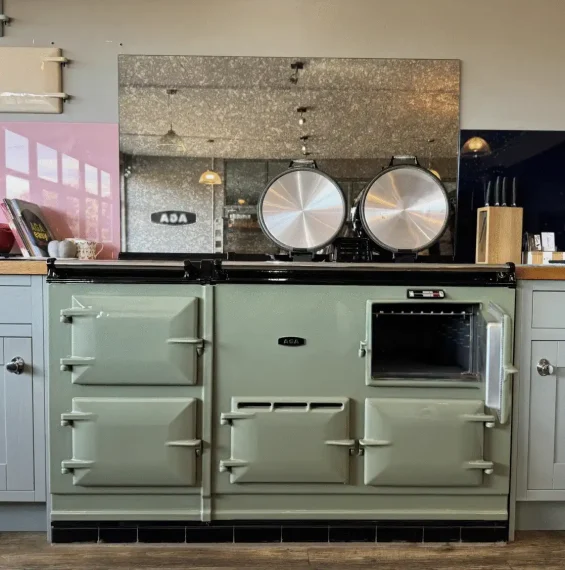
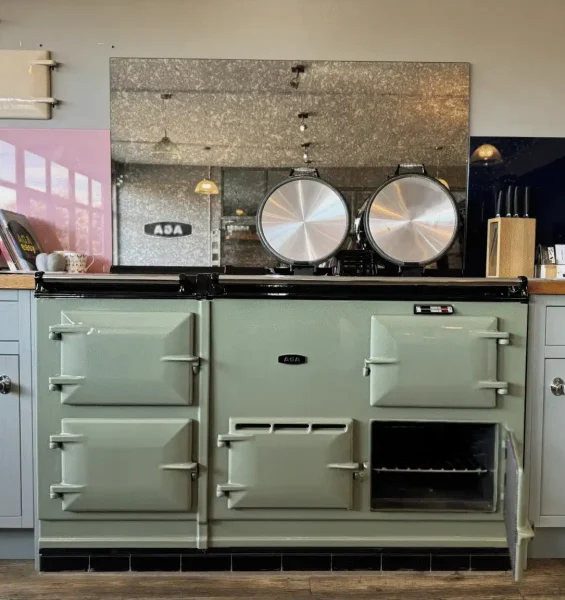
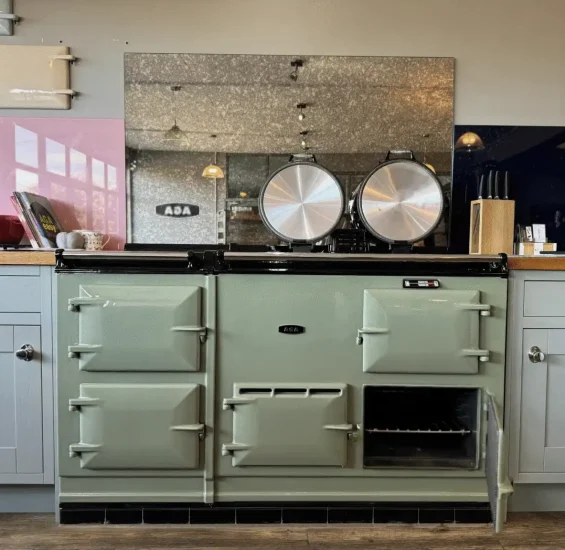
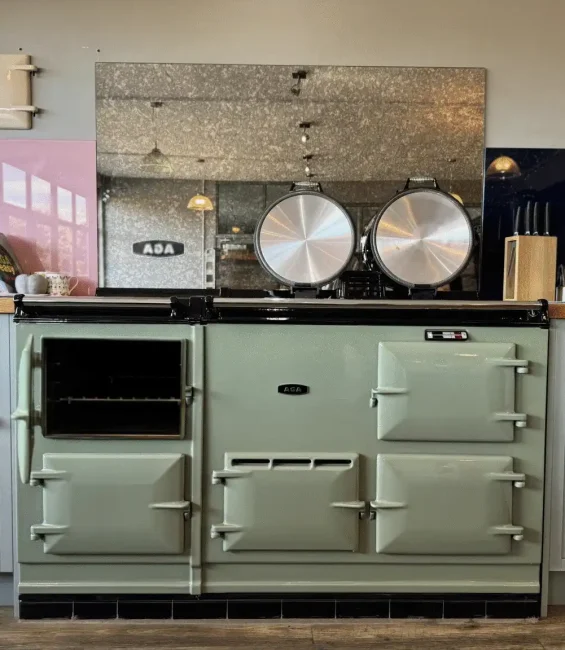
This guide is for cast iron heat storage Aga cookers with the classic oven names (roasting, baking, simmering, and sometimes warming). Temperatures are best treated as bands, because shelf position, cookware, and how settled the cooker is can change what you see.

If you have an Aga Masterchef Deluxe (a thermostat controlled range cooker), this chart will not match because it works like a conventional oven.

Contents

Quick Aga Oven Temperature Chart

Ovens
Typical Temperature Band
Best For

Roasting oven

200°C to 240°C

Roasts, browning, crisping, pizza, finishing dishes

Baking oven

140°C to 180°C

Cakes, pastries, biscuits, steady everyday baking

Simmering oven

110°C to 120°C

Slow cooking, casseroles, steaming, overnight cooking

Warming oven (selected models)

60°C to 90°C

Holding food, warming plates, resting meat

Quick Aga Hotplates Temperature Chart

Hotplates
Typical Temperature Band
Best For

Boiling plate

330°C to 350°C

Rapid boiling, high heat starts, stir frying, searing

Simmering plate

220°C to 250°C

Sauces, gentle frying, eggs, heating milk

What Temperature is The Aga Roasting Oven?

Typical band: 200°C to 240°C

This is the high heat oven. Use it when you want colour and crisp edges.

Best for:

  • Roast chicken and joints

  • Roast potatoes and tray bakes

  • Pizza and breads that need a strong start

  • Finishing pies, gratins, crumbles

If food is browning too quickly:

  • Drop the dish down a shelf, or

  • Move it to the baking oven to finish through without adding more colour

aga-roasting-oven

What Temperature is The Aga Baking Oven?

Typical band: 140°C to 180°C

This is your steady, reliable baking oven. If you are unsure where a recipe belongs, this is usually the best starting point.

Best for:

  • Cakes, muffins, tray bakes

  • Pastry, biscuits, scones

  • Fish, pies, crumbles and everyday family cooking

If cakes look done outside but are undercooked inside:

  • Move the tin lower

  • Use a thicker tin if yours is thin and dark

  • Give it time rather than pushing it back into the roasting oven

aga-baking-oven
aga-baking-oven

What Temperature is the Aga Baking Oven?

Typical band: 140°C to 180°C

This is your steady, reliable baking oven. If you are unsure where a recipe belongs, this is usually the best starting point.

Best for:

  • Cakes, muffins, tray bakes

  • Pastry, biscuits, scones

  • Fish, pies, crumbles and everyday family cooking

If cakes look done outside but are undercooked inside:

  • Move the tin lower

  • Use a thicker tin if yours is thin and dark

  • Give it time rather than pushing it back into the roasting oven

What Temperature is The Aga Simmering Oven?

Typical band: 110°C to 120°C

This is the low, gentle oven for long slow cooking. It is also brilliant for steaming and heavier cakes.

Best for:

  • Stews, casseroles, curries and braises

  • Pulled meats and slow cooked sauces

  • Steaming vegetables in stacked pans

  • Fruit cake and cheesecakes

A simple method that works:

  1. Bring the pot to a simmer on the boiling plate

  2. Put it in the simmering oven with the lid on

  3. Leave it alone and let the cooker do the work

aga-simmering-oven

What Temperature is The Aga Warming Oven?

Typical band: 60°C to 90°C (on selected models)

This oven is about timing and calm, not “cooking”.

Best for:

  • Holding food while you finish the last dish

  • Warming plates and serving dishes

  • Resting meat before carving

warming-oven-aga
warming-oven-aga

What Temperature is The Aga Warming Oven?

Typical band: 60°C to 90°C (on selected models)

This oven is about timing and calm, not “cooking”.

Best for:

  • Holding food while you finish the last dish

  • Warming plates and serving dishes

  • Resting meat before carving

Aga Hotplate Temperatures

Boiling plate

Typical band: 330°C to 350°C

Use it for fast boiling and high heat starts. It is the plate for getting pans moving quickly.

Simmering plate

Typical band: 220°C to 250°C

Use it for control. It is ideal for sauces, eggs, gentle frying, and anything that would scorch if rushed.

A simple rule:

  • Boiling plate for speed

  • Simmering plate for steady cooking

aga Range Cookers Explained
john-wray-range-cookers-grey-aga-yorkshire

Why Aga Temperatures Vary In Real Life

Aga cooking is radiant heat cooking. Your results can shift for very normal reasons:

  • Shelf position matters. Higher shelves cook hotter than lower shelves.

  • The cooker needs time to settle after being turned on or after heavy use.

  • Big cold trays of food pull heat out of the cast iron at the start, then it rebounds.

  • Door opening time makes a difference, especially for baking.

Use the chart as your baseline, then fine tune with shelf position.

Converting Recipes to Aga Ovens

Most recipes are written for fan ovens. Aga cooking is different because the heat is stored in cast iron and radiates into the food, but conversions are still straightforward once you use a repeatable method.

Step 1: Convert fan temperature to conventional temperature

A quick rule most people use:

  • Fan oven temperature + 20°C = conventional oven temperature

Example:

  • 160°C fan becomes about 180°C conventional

  • 180°C fan becomes about 200°C conventional

Step 2: Match the conventional temperature to the right Aga oven

Recipe temperature (conventional)
Best Aga oven to start with

220°C to 240°C

Roasting oven

140°C to 180°C

Baking oven

110°C to 120°C

Simmering oven

Holding and resting

Warming Oven

Gas Mark conversion table

Gas Mark
Conventional °C
Fan °C

1

140°C

120°C

2

150°C

130°C

3

160°C

140°C

4

180°C

160°C

5

190°C

170°C

6

200°C

180°C

7

220°C

200°C

8

230°C

210°C

9

240°C

220°C

Quick “What Oven Do I Use?” Examples

My Recipe Says 180°C Fan

That is roughly 200°C conventional.

  • For cakes and pastry, start in the baking oven.

  • For crisping and browning, start in the roasting oven and move to baking if it needs longer.

My Recipe Says Low And Slow At 120°C

That is simmering oven territory. Use a lidded pot and let it run.

I Need Everything Ready At Once

Use the warming oven to hold dishes at serving temperature while you finish the last items.

How To Check If Your Aga Temperatures Are Right

If your cooking results have changed, measure once and remove the guesswork.

A practical check:

  1. Put a reliable oven thermometer on the middle shelf

  2. Leave the door shut and let the cooker settle

  3. Check the reading

  4. Repeat one shelf higher and one shelf lower, so you understand the oven’s gradient

What matters is consistency and repeatability, not chasing one perfect number.

How Electric Conversions Change Temperature Control

Electric conversions keep the cast iron cooking character, but they change one big thing. Instead of living with fixed heat zones all day, you can control when heat is on and which parts of the cooker are running. That can make day to day cooking cheaper to run and easier to plan, especially if you do not need every oven on full heat all the time.

What Changes With A Conversion

  • You can often run fewer ovens on quieter days and bring extra heat on when you need it

  • You get more predictable control for baking and modern recipes

  • Some systems offer Eco or Rest settings, so the cooker idles at a lower level between meals

  • Some systems offer faster heat-up and optional app control

How We Help At John Wray Range Cookers

At John Wray Range Cookers, we install the most advanced electric conversion systems as part of a full Aga refurbishment, or as an upgrade for owners who want better control and lower running costs without losing the cast iron Aga feel.

If you already own an Aga, we can assess your setup, talk you through the best option for how you cook, then install the conversion on-site. If your cooker also needs servicing or refurbishment, we can plan the work so it is all done properly in one go.

If you are looking to buy a reconditioned Aga, we can help with that too. We supply refurbished cast iron Aga cookers and can advise on the best conversion options for your home and cooking style.

Quick Overview Of The Systems We Fit

eControl Series X
Flexible day to day control with Eco settings, a good option if you want modern control without making things complicated.

eControl Series X-Squared
A performance focused system designed for quicker heat-up, ideal if you want the cooker ready faster and like modern controls.

Electrickit Classic
A proven, straightforward conversion that keeps a very traditional feel, with practical control over how the cooker runs.

Electrickit Advanced
A more feature rich setup, suited to people who want extra control options such as timers and app control depending on configuration.

Electric Conversion Comparison At A Glance

SystemBest ForDay To Day FeelControl Style
eControl Series XFlexible daily cookingModern, simpleZoned control with Eco settings
eControl Series X-SquaredFaster heat-up and convenienceVery modernZoned control, performance focused
Electrickit ClassicTraditional feel with controlMost “classic”Straightforward oven control
Electrickit AdvancedMore features and flexibilityModernMore advanced controls and options


Want More Consistent Aga Temperatures Day To Day?

If baking is unpredictable or roasting is catching too fast, it’s worth a quick chat.
Request a callback and we’ll help you pinpoint the cause and outline practical options, including servicing, usage tweaks, and conversion upgrades for improved control.

FAQs

What Temperature Is The Aga Roasting Oven?

The roasting oven typically runs at about 200°C to 240°C, making it the best choice for browning, crisping, and quick roasting.

What Temperature Is The Aga Baking Oven?

The baking oven typically sits around 140°C to 180°C, which suits cakes, pastry, biscuits, and steady everyday baking.

What Temperature Is The Aga Simmering Oven?

The simmering oven typically runs at about 110°C to 120°C, ideal for slow cooking, casseroles, and steaming.

What Temperature Is The Aga Warming Oven?

On models that have one, the warming oven is typically around 60°C to 90°C, used for holding food, warming plates, and resting meat.

What Temperature Are Aga Hotplates?

The boiling plate is typically around 330°C to 350°C for fast boiling and searing, while the simmering plate is typically around 220°C to 250°C for gentler cooking.

Why Do Aga Oven Temperatures Vary?

Because Aga cooking uses stored radiant heat, temperatures vary by shelf height, cookware, how long the cooker has been settled, and how often the door is opened. Treat the figures as bands, then fine tune with shelf position.

How Do I Convert A Fan Oven Recipe For An Aga?

As a quick rule, add about 20°C to the fan temperature to estimate a standard non-fan oven temperature, then choose the closest Aga oven zone and adjust with shelf position and time.

How Do I Know Which Aga Oven To Use For A Recipe Temperature?

As a starting point, higher temperatures (around 220°C to 240°C) suit the roasting oven, mid temperatures (around 140°C to 180°C) suit the baking oven, and low temperatures (around 110°C to 120°C) suit the simmering oven.

Do Electric Conversions Change Aga Temperatures?

Electric conversions keep the cast iron cooking style, but they change how you manage heat. You can control when heat is on and which zones are running. For the exact ranges and settings for eControl and Electrickit systems, see the dedicated electric conversion temperatures guide.