

If you have looked at a 2 oven Aga and feel you would like a little more flexibility, a 3 oven Aga is usually the next model to consider.
The extra oven is the key difference. You still have the classic Aga look, the two hotplates and the gentle background warmth – but now you have a separate baking oven instead of having to share the roasting oven for everything.
On this page we explain what a 3 oven Aga actually is, how the three ovens work together, how much space you will need, and the type of home it tends to suit best. We will also point you to more detailed guides on temperatures, dimensions, running costs and prices so you can make a clear, confident decision.
At John Wray Range Cookers we specialise in reconditioned and converted Aga cookers, so what follows is based on real installations and real kitchens, not just brochure diagrams.
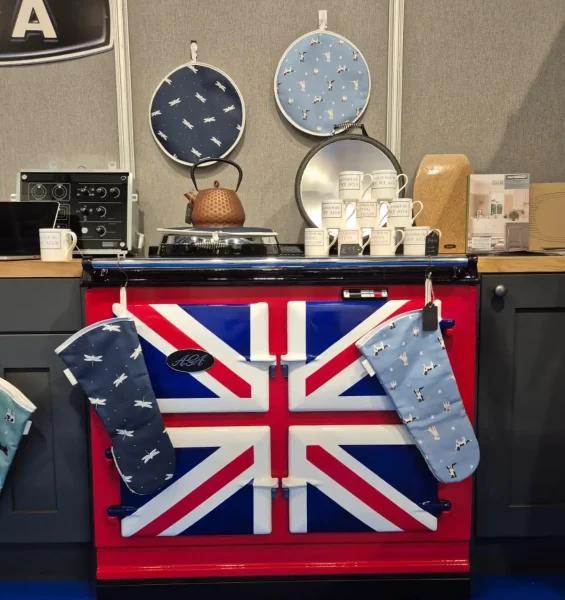
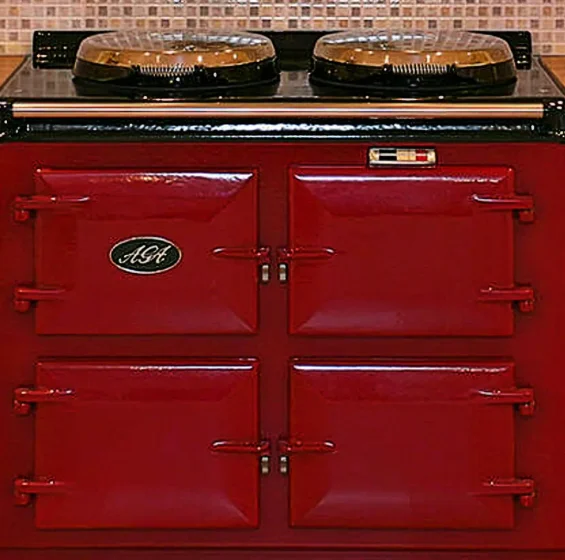
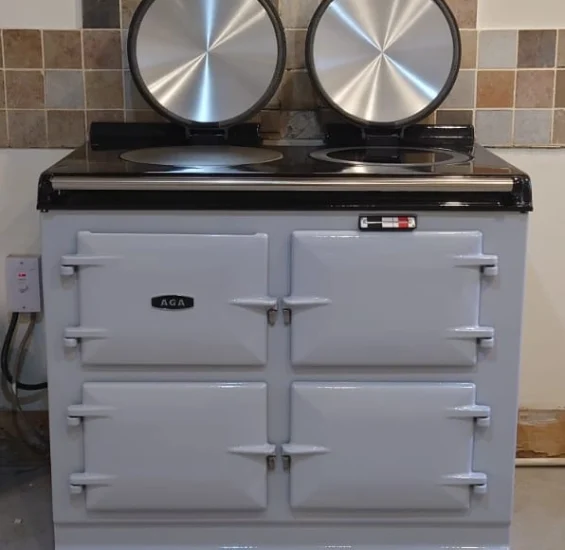
A 3 oven Aga is a cast-iron heat-storage cooker that gives you:
Three separate ovens
Two hotplates under the top lids
A heavy, enamelled hotplate top that radiates gentle background warmth
On a classic 3 oven layout the doors usually work like this:
Top left – Roasting oven
Middle left – Baking oven
Bottom left – Simmering oven
On many modern “Deluxe” castings, the 3 oven Aga shares the same footprint as the 2 oven version – the extra oven is built into the same width unit rather than adding an extra section on the side. So you gain a third temperature zone without needing a bigger wall.
The key difference compared with a 2 oven Aga is simple: instead of constantly adapting the roasting oven (with cold shelves) to behave like a baker’s oven, you now have a dedicated baking oven that sits at a more moderate temperature all the time.
The useful thing about a 3 oven Aga is not just that it has three doors, it’s that each oven has a clear job. Once you understand what each one is “for”, planning a meal becomes very straightforward.
The roasting oven is your high-heat workhorse. It’s used for:
Roasts and joints of meat
Crispy potatoes and vegetables
Pies, pasties and sausage rolls
Gratin dishes and lasagnes
Quickly baked items like pizzas and flatbreads
The upper part of this oven is fiercest, with heat softening as you move lower. You can use this to your advantage – put potatoes or crackling higher for extra crisp, and move more delicate items lower down.
The baking oven is what really separates the 3 oven experience from the 2 oven one.
Instead of relying on a cold plain shelf to protect cakes and biscuits from roasting heat, you now have a moderate, stable oven that is perfect for:
Cakes and sponges
Muffins and traybakes
Biscuits and cookies
Bread, rolls and soda bread
Quiches, tarts and everyday one-tray bakes
If you bake often, having this middle-temperature oven “always ready to go” is usually the reason people choose a 3 oven Aga.
The third oven is the gentle one. It runs at a much lower temperature and is ideal for:
Slow stews and casseroles
Braises and pulled meats
Stocks, bone broths and long-simmered soups
Meringues
Keeping plates and dishes warm
Think of it as a built-in slow cooker and plate warmer rolled into one. Many owners will move dishes down here to hold them without overcooking while they finish off veg or gravy on the hotplates.
On top you still have two hotplates under the lids:
The boiling plate, which is extremely hot and used for fast boils, searing, stir-fries and getting pans up to temperature quickly
The simmering plate, which is gentler and used for sauces, porridge, eggs and general low-heat pan work
You don’t fiddle with knobs as much as you do on a conventional hob; instead you move pans between plates and lift or lower the lids. Once you get used to it, it’s an easy and instinctive way to cook.
Every Aga behaves slightly differently. 3 oven Aga temperatures vary with model, fuel type and controls, but the three ovens are designed to sit in different bands:
Roasting oven – the hottest
Baking oven – a moderate “normal” oven
Simmering oven – low and gentle
As a rough guide only:
The roasting oven behaves like a hot conventional oven in the low-to-mid 200s °C at the top.
The baking oven sits lower, in a comfortable baking range for most cakes and pastries.
The simmering oven runs far cooler, suitable for long, gentle cooking and keeping food warm.
Because the Aga is heat-storage, there usually isn’t a digital read-out on traditional models – you learn it by shelf position and experience rather than treating it like a fan oven with a thermostat.
For a deeper explanation of oven zones, shelf positions and how to translate recipes, see our main Aga oven temperature guide.
When a 3 oven Aga is converted to a modern electric system, you keep the three-oven layout (roasting, baking and simmering) but gain much more direct control over the heat.
In everyday use this usually means:
You can set modes or target temperatures (for example Roast, Bake, Simmer or a specific °C) for the ovens.
Each oven behaves as you’d expect – roasting hot, baking moderate, simmering low – but you have more control over timings and warm-up/cool-down.
The hotplates still behave like “boiling” and “simmering” plates, but you can turn them up, down or off entirely when you don’t need them.
To compare the different systems and choose the right electric conversion for your 3 oven Aga, see our Aga electric conversion page. For typical budgets and price bands by system and oven count, visit our Aga electric conversion cost page.
One of the attractions of a 3 oven Aga is that, on many castings, it shares the same footprint as the 2 oven version – so you can gain the extra oven without needing extra wall space.
In most kitchens you only need to check:
The width of the alcove or straight run where the cooker will sit
That there is enough depth so the cooker doesn’t jut out awkwardly past your units
That surrounding doors, drawers and walkways will still open comfortably once the cooker is in place
Exact measurements and clearances depend on the model and fuel or conversion system. All the detailed figures – widths, heights, depths, lid clearances and suggested recess sizes – are set out on our dedicated Aga dimensions page.
If you’re unsure, measure your space, compare it with the figures there, and then send us your measurements and a couple of photos so we can confirm whether a 3 oven Aga will fit the way you’re imagining.
3 oven Agas exist in several fuel and control setups, particularly on the reconditioned market.
You will commonly see:
Traditional oil- or gas-fired 3 oven Agas running as always-on heat-storage cookers
Dual-control 3 oven models, where the ovens are heat-storage but the hotplates can be switched on and off electrically
Factory electric 3 oven Agas, using electric elements and controls but keeping the cast-iron body
Reconditioned 3 oven Agas converted to modern electric systems, where each oven and hotplate can be controlled separately
Modern electric and conversion systems can offer:
Faster warm-up and cool-down from slumber or ECO modes
Separate control of ovens and hotplates
Programmable timers and, on some systems, app control
The ability to reduce or switch off background heat in summer
Potential running-cost savings compared with older, always-on oil or gas models if you don’t need 24/7 heat
If you already own a tired or older 3 oven Aga, you may not need to replace it. In many cases we can strip it down, re-enamel the panels, renew worn parts and rebuild it so it looks and behaves like a new cooker. You can read more about what’s involved on our Aga refurbishment page, and if you are weighing refurbishment against buying a different cooker, our Aga refurbishment cost guide explains typical costs and what is included.
If your main worry is running costs rather than looks, our Aga running costs explains how different fuel types and modern electric conversion systems compare day to day.
From the outside, many 2 and 3 oven Agas look very similar and often share a similar footprint. The main difference is inside: a 2 oven Aga has a roasting oven and a simmering oven, while a 3 oven Aga adds a third, dedicated baking oven.
On a 2 oven Aga you create a baking zone in the roasting oven, usually with the help of a cold plain shelf to temper the heat. This works well once you are used to it, but it does mean the same oven is doing two jobs.
On a 3 oven Aga you have:
A roasting oven for high-heat cooking
A baking oven set at a more moderate temperature
A simmering oven for long, gentle cooking and warming
In practice this gives you three clear temperature zones to work with at the same time. If you bake regularly, like to cook several dishes together, or simply prefer not to rely on cold shelves and juggling shelf positions, a 3 oven Aga usually feels more relaxed to live with than a 2 oven model.
If you are still deciding between the different Aga sizes across the whole range, you can also look at our main Which Aga cooker should you choose guide.
A 3 oven Aga tends to suit people who want more flexibility than a 2 oven model but don’t have the space (or the need) for a big 4 oven or 5 oven Aga cooker.
It’s often the best choice when:
You bake cakes, bread or puddings regularly and like the idea of a baking oven that’s always in the right sort of temperature range
You often have more than one thing in the oven at once and want three clear temperature zones ready to use
Your kitchen can easily take a standard Aga footprint, but a wider cooker would feel cramped or overpowering
You want the option of modern electric or converted control systems, but still like the simplicity of a traditional Aga layout
You want “more Aga” than a 2 oven, but don’t genuinely need four or five ovens on a regular basis
If several of these sound like you, there’s a good chance a 3 oven Aga will give you exactly the extra flexibility you’re looking for, without demanding too much extra space or budget.
Tell us a little about your space and your cooking habits and we will give you straightforward, no-obligation advice on whether a 3 oven Aga is the right option for you.
Request a callback and one of our team will get back to you at a convenient time.
Swale Lodge, Scorton Road, Brompton on Swale, Richmond, North Yorkshire, DL10 7EQ
© 2026 - John Wray Range Cookers is a trading name of John Wray Country Stoves Ltd | All rights reserved.
John Wray Country Stoves Ltd is an independent re-seller and is not authorised by or affiliated with Aga Rangemaster Ltd. “AGA” is a registered trademark of Aga Rangemaster Ltd.