

Choosing the right Aga is about more than just size. It’s about how you cook, how much space you have, and what fits best into your home.
Some people prefer the simplicity of a 2 oven model. Others need more oven space for family cooking or baking. Every layout has its place, and each one works a little differently.
Unlike a standard cooker, an Aga stove has multiple ovens that stay at set temperatures. One runs hot for roasting. Another is cooler for baking or simmering. You don’t adjust the heat. You just use the oven that suits what you’re making.
At John Wray Range Cookers, we’ve been working with Aga cookers for over 30 years. We recondition and refurbish Agas every week, and we fit modern electric conversions too, so we see first hand what each oven layout is like to live with. This guide walks you through the differences between 2, 3, 4 and 5 oven models so you can choose the one that suits your kitchen and the way you like to cook.
|
Model
|
Ovens Included
|
Hotplates
|
Warming Plate
|
Width
|
Best For
|
|---|---|---|---|---|---|
|
2 Oven |
Roasting, Simmering |
Boiling and Simmering |
No |
approx. 99 cm |
Small kitchens, everyday essentials |
|
3 Oven |
Roasting, Baking, Simmering |
Boiling and Simmering |
No |
approx. 99 cm |
Home bakers, flexible family cooking |
|
4 Oven |
Roasting, Baking, Simmering, Warming |
Boiling and Simmering |
Yes |
approx. 148 cm |
Larger households, entertaining guests |
|
5 Oven |
3 Oven plus extra slow cook and warming ovens in a side module |
Boiling and Simmering |
Yes |
approx. 148 cm |
Maximum flexibility for busy kitchens |
The 2 oven Aga is the original layout most people picture. It includes a roasting oven, a simmering oven, and two hotplates on top. One is for boiling, one is for simmering.
Typical temperatures (approx):
Roasting oven: 220 to 240°C
Simmering oven: about 115 to 140°C
Boiling plate: about 300 to 340°C
Simmering plate: about 200 to 240°C
For many homes, a 2 oven Aga stove is the simplest way to enjoy Aga cooking without needing extra space.
At about 99 cm wide, it suits smaller kitchens and covers most day to day cooking. Even without a baking oven, you can still bake using the oven floor or a cold plain shelf to manage the heat.
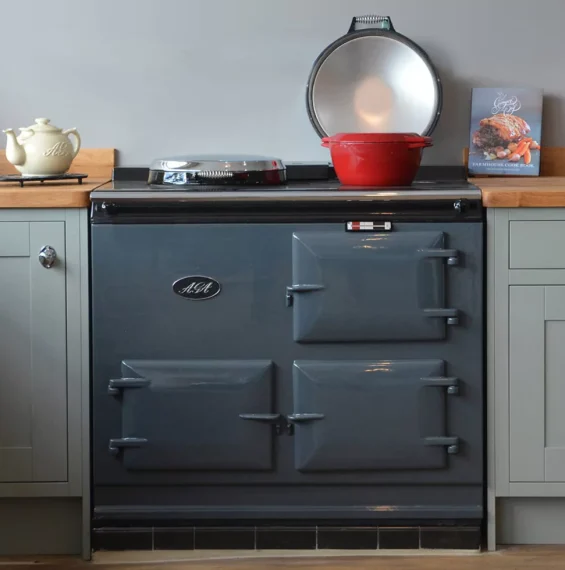
The 3 oven Aga has the same footprint as the 2 oven model but adds a dedicated baking oven. You get roasting, baking and simmering ovens, plus the same two hotplates on top.
Typical temperatures (approx):
Roasting oven: 220 to 240°C
Baking oven: about 170 to 200°C
Simmering oven: about 115 to 140°C
Boiling plate: about 300 to 340°C
Simmering plate: about 200 to 240°C
It’s about 99 cm wide like the 2 oven model, but it feels like a big step up in day to day use. You can roast in one oven, bake in another, and simmer something gently in the third without juggling shelves or timings.
There’s no warming oven, but many people use the lids for resting pans or warming plates. If you bake often and want more flexibility without going up in size, the 3 oven model is usually the best balance.
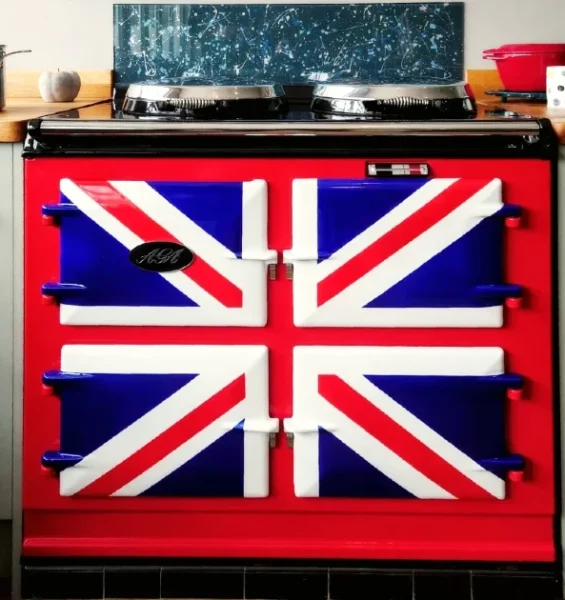
The 3 oven Aga has the same footprint as the 2 oven model but adds a dedicated baking oven. You get roasting, baking and simmering ovens, plus the same two hotplates on top.
Typical temperatures (approx):
Roasting oven: 220 to 240°C
Baking oven: about 170 to 200°C
Simmering oven: about 115 to 140°C
Boiling plate: about 300 to 340°C
Simmering plate: about 200 to 240°C
It’s about 99 cm wide like the 2 oven model, but it feels like a big step up in day to day use. You can roast in one oven, bake in another, and simmer something gently in the third without juggling shelves or timings.
There’s no warming oven, but many people use the lids for resting pans or warming plates. If you bake often and want more flexibility without going up in size, the 3 oven model is usually the best balance.
The 4 oven Aga adds a dedicated warming oven, and on many models you also gain a warming plate on top. This gives you more breathing room when you’re cooking a full meal.
Typical temperatures (approx):
Roasting oven: 220 to 240°C
Baking oven: about 170 to 200°C
Simmering oven: about 115 to 140°C
Warming oven: about 60 to 80°C
Boiling plate: about 300 to 340°C
Simmering plate: about 200 to 240°C
At around 149 cm wide, it needs more space than the 2 or 3 oven models. In return, you can keep food ready to serve without using up your main oven space. It makes a noticeable difference when you’re doing sides, sauces, and timing everything to land together.
If you cook for a family, entertain, or just want less juggling, the 4 oven layout is a strong choice.
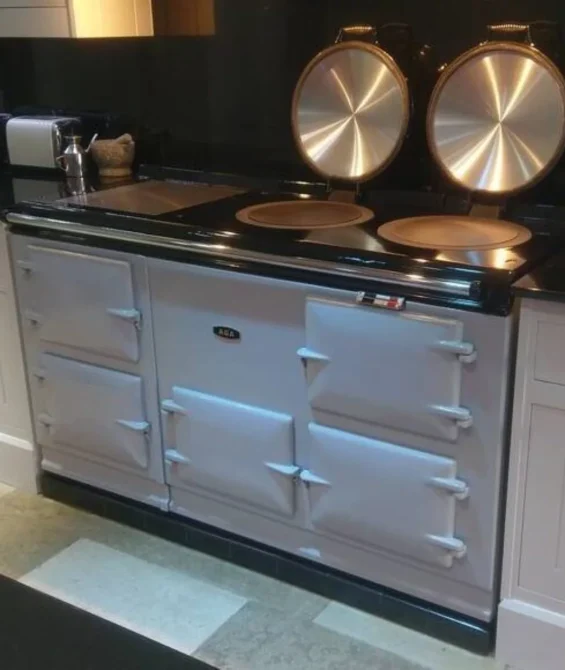
A 5 oven Aga is often a 3 oven cooker with a side hotcupboard. That hotcupboard usually adds a slow cook oven and a warming oven, plus a warming plate on top. It’s designed to give you more gentle cooking space, without crowding the main ovens.
Typical temperatures (approx):
Roasting oven: 220 to 240°C
Baking oven: about 170 to 200°C
Simmering oven: about 115 to 140°C
Slow cook oven: about 100 to 120°C
Warming oven: about 60 to 80°C
Boiling plate: about 300 to 340°C
Simmering plate: about 200 to 240°C
The benefit is simple. You remove bottlenecks. You can roast and bake as normal, keep something gently cooking in the background, and still have dedicated warming space for plates or finished dishes.
This layout is usually around 148 cm wide, depending on the exact model. If you cook big meals often, batch cook, or want more gentle oven space day to day, the 5 oven setup makes life easier.
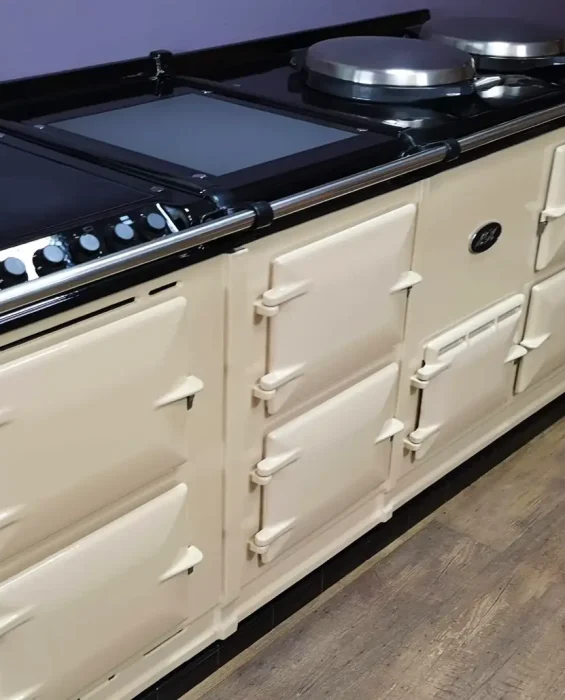
A 5 oven Aga is often a 3 oven cooker with a side hotcupboard. That hotcupboard usually adds a slow cook oven and a warming oven, plus a warming plate on top. It’s designed to give you more gentle cooking space, without crowding the main ovens.
Typical temperatures (approx):
Roasting oven: 220 to 240°C
Baking oven: about 170 to 200°C
Simmering oven: about 115 to 140°C
Slow cook oven: about 100 to 120°C
Warming oven: about 60 to 80°C
Boiling plate: about 300 to 340°C
Simmering plate: about 200 to 240°C
The benefit is simple. You remove bottlenecks. You can roast and bake as normal, keep something gently cooking in the background, and still have dedicated warming space for plates or finished dishes.
This layout is usually around 148 cm wide, depending on the exact model. If you cook big meals often, batch cook, or want more gentle oven space day to day, the 5 oven setup makes life easier.
When planning your kitchen, the footprint is only the starting point. You also need sensible clearances for lids, servicing, and fitting between units. Aga cookers are heavy cast iron appliances, so the base or hearth must be level and capable of supporting the full weight.
Typical overall aga cooker dimensions (guide):
2 and 3 oven: 987mm (w) x 851mm (h) x 698mm (d)
4 and 5 oven: 1487mm (w) x 851mm (h) x 698mm (d)
Height is measured to the top plate, and depth is quoted to the front of the handrail. While you might see different height figures in some guides, 851mm is the standard for a classic Aga plate. To bring this flush with a modern 900mm worktop, we typically use a 60mm adjustable plinth.
Typical weights (guide):
As these are original sand-cast iron machines, they are significantly heavier than modern sheet-metal alternatives.
2 oven: approx 406kg
3 oven: approx 477kg
4 oven: approx 584kg
5 oven: approx 620kg
Clearance tip:
Aga installation guidance specifies leaving a 3mm gap on each side between the top plate and adjoining work surfaces. This expansion gap is vital, it allows the iron to breathe as it heats up and ensures the top can be safely lifted or removed for servicing without damaging your kitchen units.
Floor loading:
Given that a 5 oven model weighs over 600kg, you must ensure your floor can support a concentrated load. While concrete floors are rarely an issue, timber floors may require additional joist support. We can advise on this during a site survey to ensure your kitchen is ready for the installation.
Once you’ve chosen the oven layout, the next step is deciding what you want to do with it.
We supply fully reconditioned Aga cookers for sale and we also refurbish existing Aga cookers, including re-enamelling and rebuild work where needed. If you already own a cooker and want it brought back to its best, our refurbishment service is often the right starting point.
A common concern with the larger 4 and 5 oven models is running cost. With a traditional oil or gas Aga, the whole cooker stays hot all the time, which can be expensive.
Where an electric conversion can make a real difference is control. With a conversion fitted to a 4 or 5 oven Aga, you can often run the cooker more sensibly day to day because you are able to use parts of it independently.
In practice, that means the left-hand warming wing can be switched on or off separately from the main cooking ovens. On a quiet weekday you can run just the ovens you actually need. When you’ve got family meals and guests, you can bring the warming wing on a few hours before serving. It gives you a high capacity Aga that is much easier to manage through the week.
We install modern electric conversion systems, including some of the most advanced control options available, so you can choose the level of flexibility that suits your home.
That includes ElectricKit Classic, ElectricKit Advanced, eControl Series X and eControl Series X Squared. We’ll explain the differences clearly and help you choose the right setup for your cooker and the way you cook day to day.
If you choose a reconditioned Aga from us, we can also upgrade the exact model you pick with an electric conversion, so you get the layout you want with the control system that suits your home.
If you’d like help choosing the right layout, request a callback and tell us your kitchen space, how many you cook for, and whether you’re considering electric control. We’ll come back to you with clear advice and the most sensible next step.
Swale Lodge, Scorton Road, Brompton on Swale, Richmond, North Yorkshire, DL10 7EQ
© 2026 - John Wray Range Cookers is a trading name of John Wray Country Stoves Ltd | All rights reserved.
John Wray Country Stoves Ltd is an independent re-seller and is not authorised by or affiliated with Aga Rangemaster Ltd. “AGA” is a registered trademark of Aga Rangemaster Ltd.